Migration lawyer Ivelin Uskov: visas, residence cards and companies in Bulgaria
Migration lawyer Ivelin Uskov of the Balkan Migration team talks about visas, residence cards, companies and property in Bulgaria – and the most common mistakes he sees.
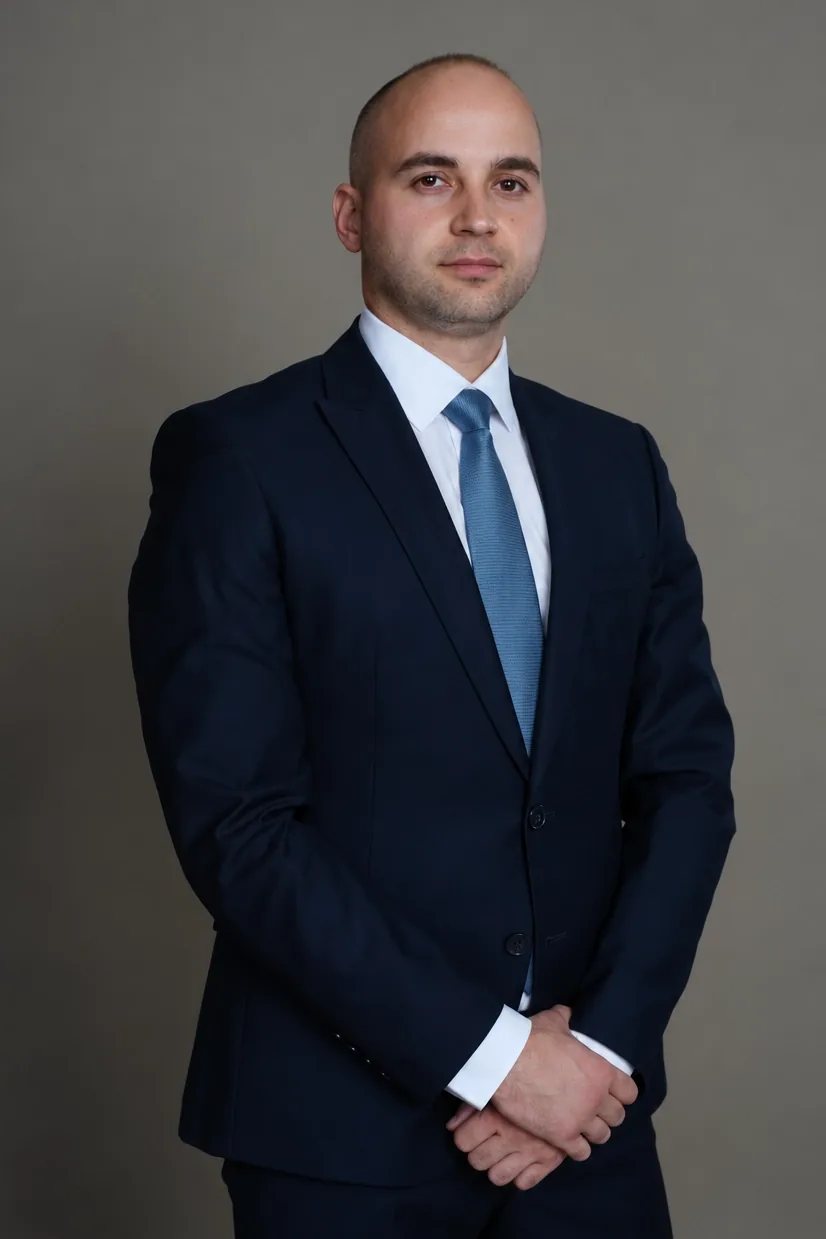
“Behind every application there is a human plan – a new job, a business, a family coming together.” – Lawyer Ivelin Uskov
Ivelin Uskov is a migration lawyer in the Balkan Migration team. He is a practising lawyer registered with the Sofia Bar Association under personal No. 1600816110. At the firm he works mainly on visas, residence cards and company registration, and he also has experience in civil and procedural law. We asked him how he works, which mistakes he sees most often and what he advises people who are thinking about moving to Bulgaria or starting a business there.
At a glance
- Practising lawyer, member of the Sofia Bar Association.
- Migration law: type C and D visas, extended, long-term and permanent residence cards, family reunification.
- Company registration in Bulgaria – fully remote, too.
- Civil and procedural law: debt collection, defending debtors in consumer and payday loan cases, real estate. Also commercial, criminal and family law.
About the profession
Please introduce yourself in a few words – who is Ivelin Uskov?
A lawyer with the Sofia Bar Association and part of the migration law team at Balkan Migration. At the firm I work with foreigners who want to live, work or do business in Bulgaria – on their visas, residence cards and companies. I also practise civil and commercial law, because clients' questions are rarely about migration alone.
How did you decide to work in migration and commercial law?
A large part of my practice is in civil and procedural law – debt collection, consumer and payday loan cases, real estate. There I see every day how much depends on accurate documents and deadlines that are met. Commercial law goes hand in hand with that, because behind most contracts and disputes there is a company. Migration law drew me in because it is where the law most directly affects people's lives: whether a family will be together, whether someone will be able to start work. At Balkan Migration the two areas meet all the time – people who come to Bulgaria often need both a residence card and a company.
What motivates you most in working with foreign clients?
The fact that behind every application there is a human plan – a new job, a business, a family coming together. People arrive in an unfamiliar country, with an unfamiliar language and rules, and it matters to have someone at their side who explains everything clearly and guides them step by step. When they finally receive their card and start the life they planned, I know the work was worth it.
Visas and residence
What kind of cases do clients most often come to you with?
Most often a residence card – a first card or a renewal, on the grounds of work, study or family. There are also many enquiries about the D visa, family reunification and company registration. People also come with civil matters – debts, loans or buying property.
Which types of visas and residence permits do you specialise in?
- Short-stay type C visas and type D visas – I put together the complete set of documents, including translations and legalisations.
- Extended residence card – on the grounds of work (including the single permit for residence and work), study, family, a pension or business.
- Long-term and permanent residence cards.
- Family reunification – when a foreigner living in Bulgaria wants to bring their spouse and children to join them.
We have described the differences between the types of residence in detail in the article “Residence in Bulgaria: extended, long-term and permanent”.
What are the most common mistakes when applying for a visa or residence in Bulgaria?
- The wrong visa. Many people arrive on a C visa or without a visa and assume they can apply for a card from within Bulgaria. As a rule, extended residence requires a D visa (Art. 24(1) of the Foreigners in the Republic of Bulgaria Act), issued on the same grounds – if the grounds are different, the application is refused (Art. 24(8)).
- Incomplete or outdated documents – a criminal record certificate that has expired, a document without a translation, without an apostille or legalisation.
- Housing. A lease that does not meet the requirements.
- Missed deadlines. The residence application is filed while the visa is still valid, and the card is renewed before it expires.
How do you help foreigners who want to settle in Bulgaria long term?
We plan the whole route, not just the next step: the D visa, the first extended residence card, the renewals and, after some years, long-term or permanent residence. Permanent residence also brings entry in the population register, an EGN (Bulgarian personal number) and a registered permanent and current address. If someone wants their family to join them, we prepare the family reunification. And when the plans include a business or a home of their own, we help with both the company and the property – all in one place.
How does the process of obtaining a residence permit work?
- Consultation – we choose the right grounds: work, study, family, a pension or business.
- D visa – in most cases this is the first step. We put together the complete set of documents for it.
- Documents in Bulgaria – housing, medical insurance, means of subsistence and the documents for the specific grounds.
- Application at the Migration Directorate or the migration unit of the regional directorate of the Ministry of Interior. We file it together with the client, because fingerprints and a photo for the card are taken when the application is filed.
- Decision and card – we follow the file until the card is collected.
What are the advantages of working with a lawyer in migration procedures?
First, we choose the right grounds from the start. Second, the documents are filed complete and properly prepared, which reduces the risk of a refusal or of a request for additional documents. Third, a lawyer can represent you before the authorities under a power of attorney and, if there is a refusal, challenge it in time – the deadlines are short.
Companies and commercial law
You also work in commercial law – what kind of companies do you most often set up for foreigners?
Most often an EOOD (a single-member limited liability company) when there is one owner, and an OOD (a limited liability company) when there are two or more partners. These forms are the most practical: as a rule the company is liable for its debts with its own assets, not with the owner's personal assets, and the minimum capital is symbolic. Less often it comes to a branch or a commercial representative office of a foreign company – when the company already operates in another country.
How difficult is it for a foreigner to open a company in Bulgaria?
It is not difficult if the documents are prepared properly. Foreigners can own and manage a Bulgarian company, and with us the whole registration can be done fully remotely – under a power of attorney, without travelling.
What are the most common questions you get about registering a company?
- Can I register a company without coming to Bulgaria? Yes – with a power of attorney.
- How much capital do I need? The minimum is symbolic, but it is good for the capital to match the business.
- Does the company give me the right to live in Bulgaria? Not on its own. There are residence grounds linked to business, but they have their own conditions, and we check them at the first consultation.
- Do I need an accountant? Yes, from day one – for the reports, the taxes and, if needed, VAT registration.
What advice would you give someone who wants to start a business in Bulgaria?
Start with a plan, not with the registration. First decide what the business will be, who will manage the company, whether the activity needs a licence or permit, and whether you will live in Bulgaria yourself – because that also determines the route to residence. Then have an accountant from day one and keep the company's money separate from your own. And ask before you sign – one hour of consultation often saves months of problems.
You can read more about the benefits of a Bulgarian company in the article “Why register a company in Bulgaria”, and the prices are on the Services and prices page.
Buying property
You also help with real estate transactions – what should foreigners know before buying?
Before you pay a deposit, check the property. It has to be clear who the owner is and whether they can sell alone – if the property was acquired during a marriage, both spouses take part in the sale. We check whether there are mortgages, attachments or other encumbrances, whether there are unpaid taxes and charges, and for new builds whether the building has Act 16 and a use permit. It is also important to know that buying a home does not by itself give you the right to reside. The law allows residence for certain investments, including in real estate, but for much larger amounts and on specific conditions.
What are the most important documents when buying property in Bulgaria?
- the seller's title document – most often a notarial deed;
- a sketch or scheme of the property from the cadastre;
- a tax assessment certificate from the municipality;
- an encumbrance certificate from the Property Register;
- the declarations signed before the notary – for example on marital status and on the source of funds;
- for new builds – Act 16 (the certificate of fitness for use) and the use permit.
If you do not speak Bulgarian, an interpreter must be present at the notary. The buyer can also be represented under a notarised power of attorney, so the transaction can go through without you coming to Bulgaria.
Are there specific requirements for foreigners acquiring real estate?
Yes, and they depend on citizenship. Citizens of European Union and European Economic Area countries can acquire land too. Citizens of other countries – for example Serbia – can buy apartments and buildings, but not land, except by inheritance by law or under an international treaty (Art. 22(1) of the Constitution). That is why, when a client wants a house with a garden or a plot, they usually buy it through a company registered in Bulgaria. Agricultural and forest land have additional conditions, and there we check each case separately.
Approach and team
What sets your approach to clients apart?
From day one the client knows which documents will be needed, how long it will take, how much it will cost and what the risks are. I do not promise an outcome that does not depend on me, but I do everything that depends on us. And I keep clients informed – no one should have to wonder how far their file has got.
What matters most to you in a successful law practice?
Trust. It is earned slowly – through accuracy, deadlines that are met and honest answers, even when they are not what the client wants to hear. It is also important to keep up with changes in the law. The Foreigners in the Republic of Bulgaria Act was amended again in 2026, and in November the National Assembly adopted further amendments. Anyone who does not follow all this soon starts giving outdated advice.
How would you describe your work with the Balkan Migration team?
As real teamwork. The lawyers and consultants at the firm – in Sofia and in Niš – complement each other, and when a case involves residence, a company and property at the same time, the client does not have to look for three different specialists. Everything is handled in one place, and each of us knows how far the case has got.
What would you say to people who are only just thinking about moving or doing business in Bulgaria?
That Bulgaria is a good choice, but it takes preparation. It is a member of the European Union, a full member of the Schengen area since 2025, and its official currency has been the euro since 2026. Taxes are among the lowest in the EU. My advice is not to start by buying a plane ticket, but with a consultation – so that we choose the right route from the very first step. You will save time, money and nerves.
Personal
What kind of person are you outside work?
A calm person who values time with the people closest to me. When I close the office door, I try to leave work there – that way I come back to my clients with a clear head the next day.
What gives you satisfaction in your profession?
The moment a client calls and says, “My family is here now”. Behind those words are months of work, documents and waiting, and that is when I know it was all worth it.
Is there a case with a client that you will never forget?
Yes, more than one. But these are people's personal stories and I prefer to keep them to myself. I can say that the cases you remember most are those where someone comes to us after a refusal, tired and without hope, and in the end receives their document. They remind me why attention to every detail matters.
What do you value most in your relationships with clients?
Openness – on both sides. I tell clients the truth about their chances, and I expect them to tell me everything too, even the awkward things, such as an earlier visa refusal. Only then can I really protect them.
How do you see migration services in Bulgaria developing in the coming years?
I think they will be increasingly in demand. Employers are hiring more and more staff from outside the EU, and Schengen and the euro make Bulgaria even more attractive for living and doing business. The laws will keep changing, and procedures will increasingly be handled electronically. That is why the need for lawyers who follow all these changes on the client's behalf will also grow.
Finally
Why can people trust Ivelin Uskov?
Because I am a practising lawyer registered with the Sofia Bar Association, and anyone can check this in the Unified Bar Register. Because the whole Balkan Migration team stands behind me. And above all because I tell the truth, even when it is not easy, and I stay with the client from the first consultation to the last document.
A meeting with lawyer Ivelin Uskov can be arranged at the firm's office in Sofia or online. Send us an enquiry – we will call you back within 24 hours. You can also meet our whole team.